

Enovix at AUSA 2026: Powering the Next Generation of Drones and Unmanned Systems
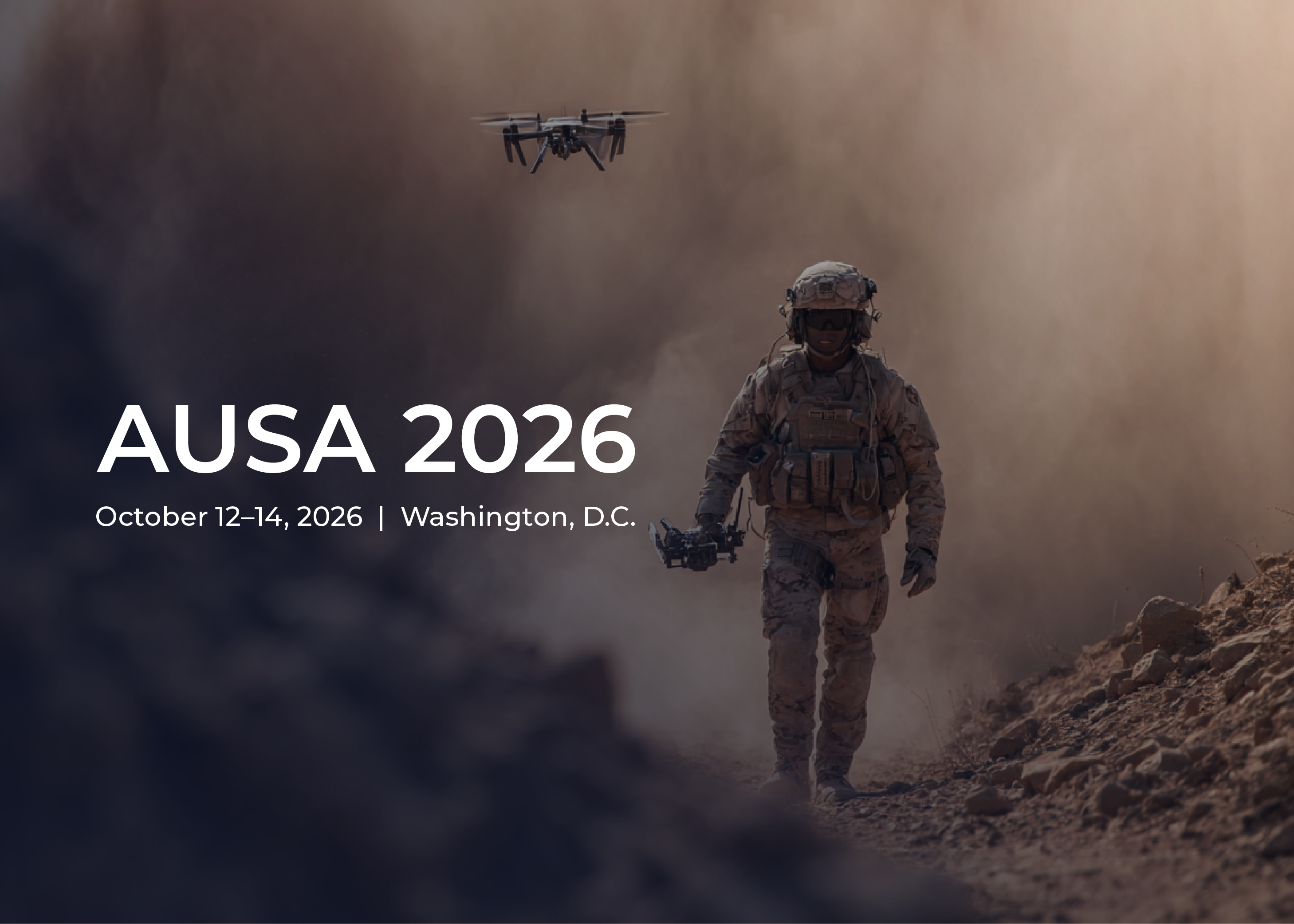
This week, Enovix joined the defense community in Washington, DC for the Association of the United States Army (AUSA) Annual Meeting & Exposition. We came away with a clear message: unmanned systems need longer endurance and higher power, and they need a supply chain that defense programs can trust.
About AUSA 2026
The AUSA Annual Meeting and Exposition ran October 12–14, 2026 at the Walter E. Washington Convention Center. AUSA describes it as North America's leading land power and professional development event, drawing over 40,000 attendees, 750+ exhibitors, and participants from more than 100 countries. Senior Army leaders, industry innovators, policymakers, and international delegations filled the halls, and drones, counter-UAS, autonomous systems and soldier-worn electronics were visible throughout. Every one of those systems depends on a battery.
Who We Met
Dr. Robin Schneider, Director of Technical Product Marketing, Suraj Talluri, Sales Manager, and Erik Vaknine, Director of Applications Engineering, represented Enovix, walking the floor to meet with program teams, engineers and procurement leaders about the Enovix MX platform. Our conversations centered on power requirements for upcoming UAS, UAV and UUV platforms, and on increasingly demanding sourcing requirements.
Why Li-ion Pouch Cells for Drones and Defense
Weight and volume drive almost every design decision in a battery-powered military system. Li-ion pouch cells offer clear advantages:
- Higher gravimetric energy density. Less weight per watt-hour means longer flight time or heavier payloads.
- Efficient packaging. Pouch cells fit the tight, irregular envelopes of small drones, UUVs and soldier-worn equipment.
- High-rate discharge. Takeoff, maneuvering and burst loads demand strong power delivery, not just capacity.
That is the thinking behind MX-1, short for Mission Execution, a platform we designed for rugged environments, rapid discharge, and high gravimetric energy density. The first product, the MX1-B01 drone cell, delivers 360 Wh/kg with extended cycle life, and we are targeting 400 Wh/kg in a next-generation product in 2027. Cells made at our South Korea factory are already deployed in aerial drones, subsea systems and munitions platforms.
Why TAA, NDAA and FEOC Compliance Matter
Performance alone no longer wins defense battery programs. Buyers increasingly ask where a cell was made and who controls the supply chain behind it.
- TAA (Trade Agreements Act): Federal purchases generally require products made in the U.S. or a designated country. Without TAA compliance, a battery may be ineligible for many applications.
- NDAA (National Defense Authorization Act): Annual NDAA provisions restrict certain foreign-sourced components in Department of Defense programs.
- FEOC (Foreign Entity of Concern): FEOC rules target supply chains tied to adversary nations. A non-FEOC supply chain reduces risk for integrators and primes.
Our drone and defense batteries manufactured in South Korea are TAA compliant and on track to be manufactured in compliance with programs governed by the NDAA. The MX platform is also backed by a non-FEOC supply chain.
A Company-Owned Factory in a Key U.S. Ally
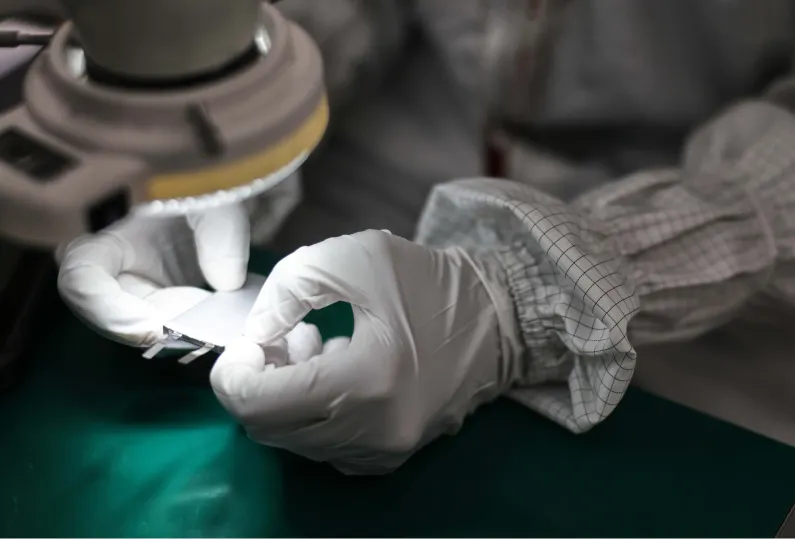
We build our drone and defense cells at a company-owned and operated facility in South Korea, a long-standing U.S. treaty ally. Owning the factory gives us direct control over quality, process and supply continuity, backed by a defense production history of over two decades.
We are now doubling our in-house drone battery capacity there, with new capacity expected in mid-2027. The expansion is capital-efficient, using existing land, buildings and readily available equipment, and it is our direct response to what defense and drone customers are asking us to deliver.
The Takeaway from AUSA
Defense programs need high-energy, high-power lithium-ion batteries from a compliant, dependable source, at scale. For UAS, UAV, UUV and other military battery-powered devices, Enovix is building toward exactly that.
Working through power requirements for an upcoming platform? Contact the Enovix team to discuss MX-1 and your sourcing requirements.

Power What's Next