
Notes from the AI + Robotics Conference in Washington, DC
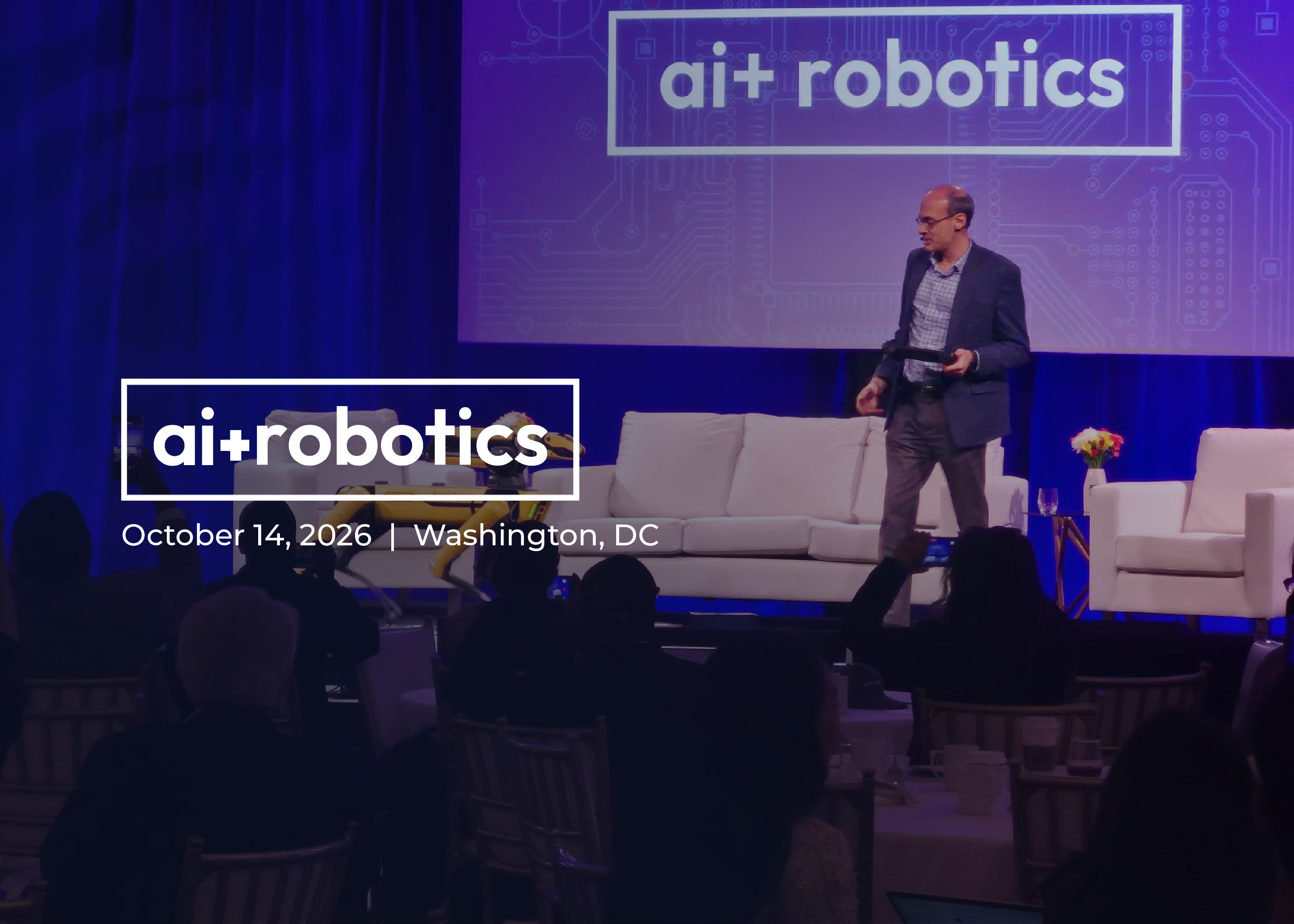
On October 14, I spent the day in Washington, DC at the AI + Robotics conference, hosted by the Special Competitive Studies Project (SCSP). I was glad to meet Martijn Rasser, SCSP’s Vice President, Technology Leadership Directorate, who organized the event, and I look forward to continuing the conversation with him. The company and organization mix made clear how broad this field is: Fanuc, Nvidia, Boston Dynamics, the University of Michigan, NIST, the Semiconductor Industry Association, and staff from the offices of Senators Ted Budd and Elissa Slotkin all had a seat at the table.

I came away convinced that the conversation about AI is shifting from the virtual world to the physical one, and that policymakers, investors, and engineers are all starting to realize it at the same time.
Policy sets the stage
The day was grounded in policy. The NSCRAM report was published recently, with a final report due in March, and it is sponsored by Senators Slotkin and Budd. Representatives from both senators’ offices were in the room, which told me this is more than an academic exercise.
The central theme was that onshoring manufacturing is not just a matter of building factories. It requires scaling up the robotics infrastructure and the critical components behind it: actuators, batteries, and the raw materials that feed them. The battery cost is about 5-10% of a robot's total cost, and a supply chain you can't count on is a vulnerablility.
The numbers are sobering
Several figures stuck with me:
- China holds roughly 30 percent of global manufacturing capacity, versus about 17 percent for the US.
- China has more robots deployed than most of the rest of the world combined, and it is far ahead in implementation.
- The US leads in software but trails in hardware.
- One projection put the US job shortfall at 2 million by 2032.
China also has the most products on the market, but speakers were clear that this comes with cyber and supply chain security risks. Depending on those products is not a long-term strategy.

The flywheel
Several speakers talked about a “flywheel” of implementation, where each installation makes the next one faster and cheaper. Early deployments are expensive and slow because everything is being learned from scratch. Each one builds expertise, reusable components, and data, which lowers the barrier for the next. It’s a hopeful framing, because it suggests momentum can compound once it starts. It also explains why falling behind is so costly: the leader’s flywheel keeps spinning faster.
Humanoids get the money, but AMRs may get the results
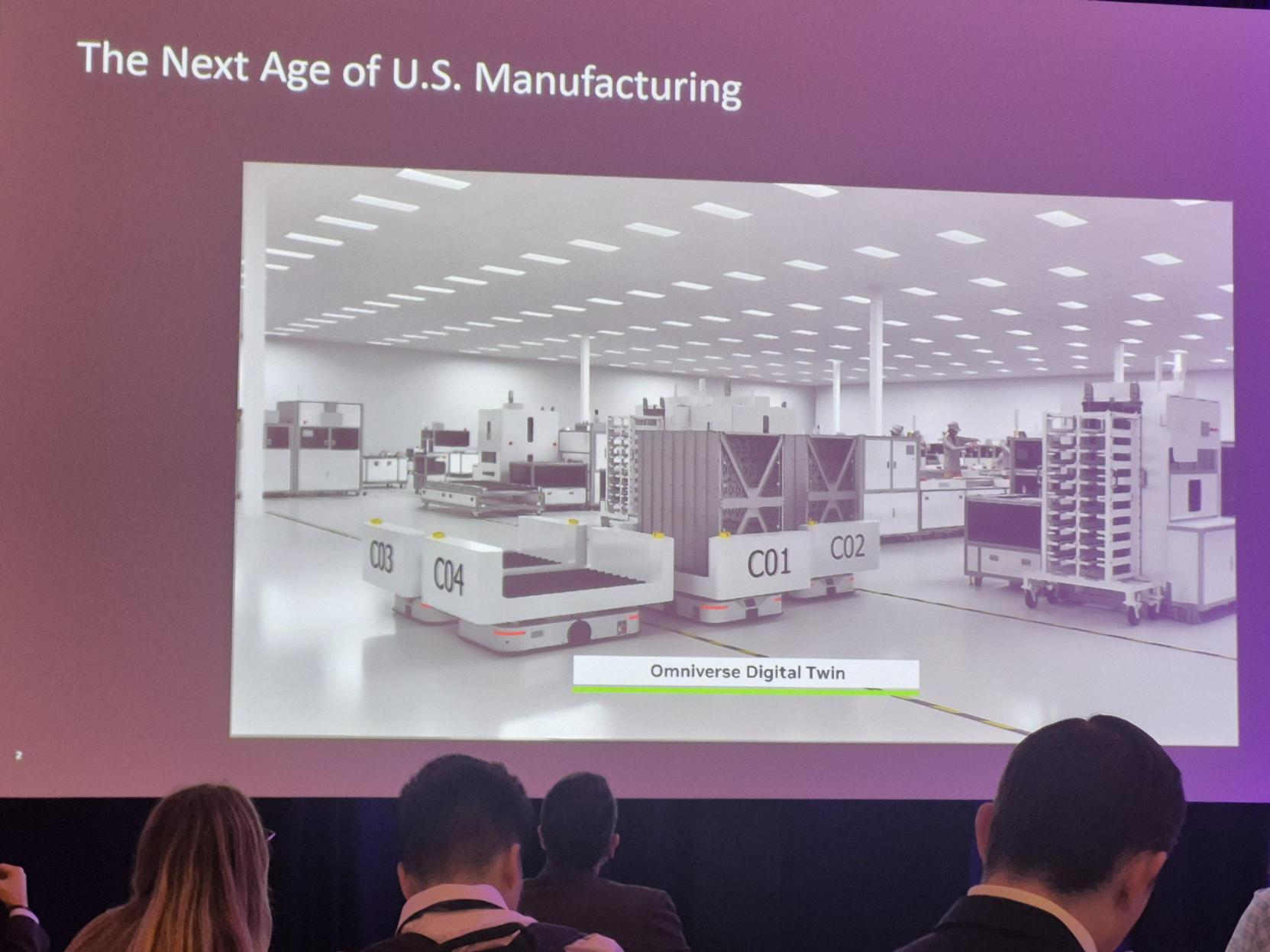
Most of the investment excitement is around humanoid robots, and I understand the appeal. But the view from the room was that autonomous mobile robots (AMRs) are the more likely near-term winners. They are simpler, and they fit naturally into smart manufacturing and warehouse environments.
One real gap came up: there isn’t enough data for low-volume, high-mix manufacturing, where products change frequently and runs are short. Digital simulation was suggested as a way to generate the training data that physical production can’t supply.
Meeting Spot
No robotics conference is complete without a demo, and Boston Dynamics brought Spot, their quadrupedal, all-purpose robot dog. Spot is one of the few legged robots that has made the jump from research lab to real commercial use. Its four legs let it climb stairs, step over obstacles, and cross uneven ground that would stop a wheeled robot. It can also carry sensors and other payloads, which is why it has become a practical tool for tasks like inspecting industrial sites, construction monitoring, and getting into places that are hazardous for people.
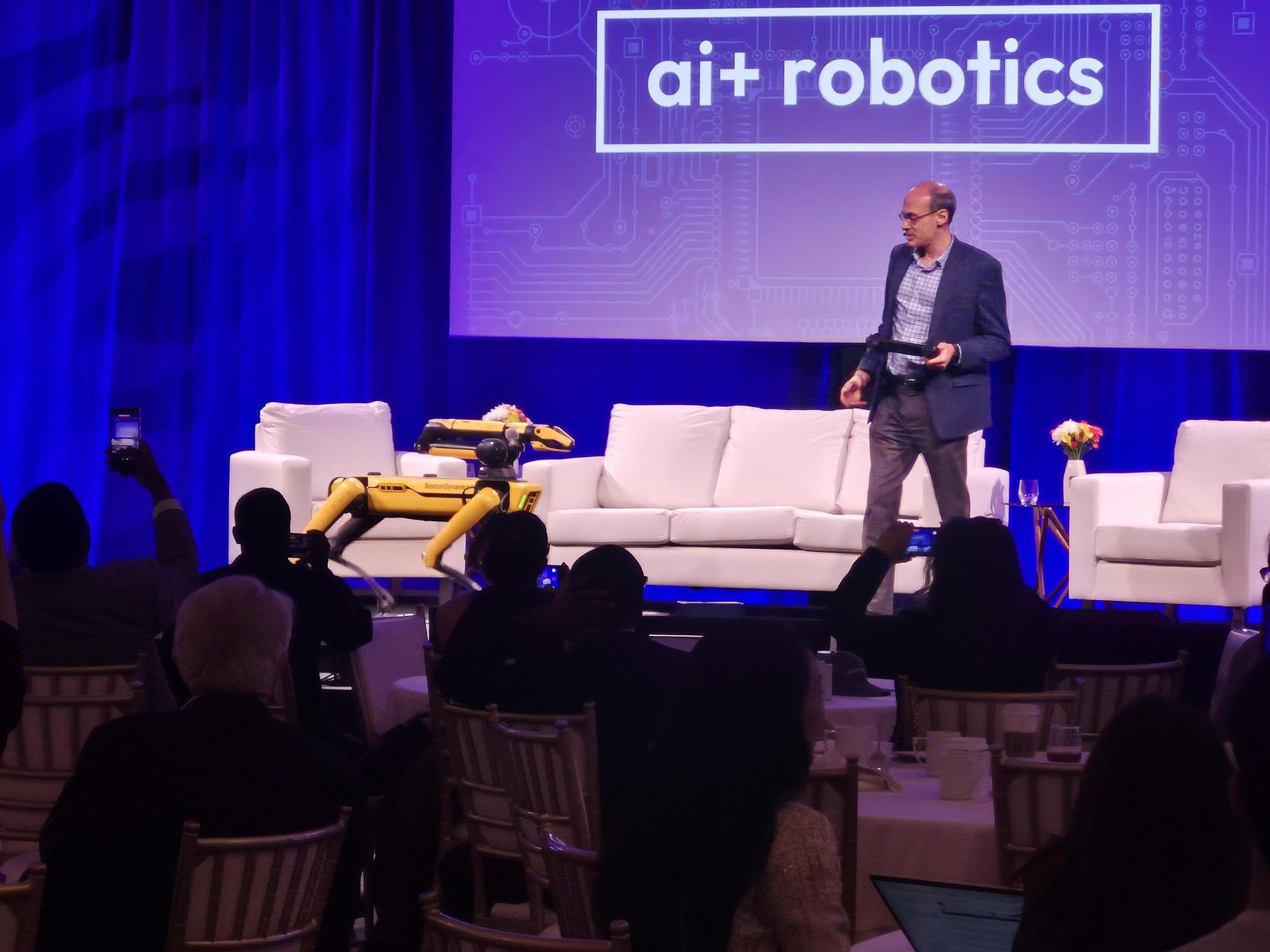
That last point connects directly to the theme of the day. Spot is a good example of robotics taking on the dull, dirty, and dangerous work so that people don’t have to. Seeing it move in person is quite different from watching a video. The way it balances and adapts to the floor beneath it feels surprisingly lifelike, and it helped make the case that this technology is ready for real work rather than just demos.
From virtual to physical
Peter Barrett of Playground and Anne Neuberger of Andreessen Horowitz spoke about investment, and their message was that we are at an inflection point, moving from the virtual to the physical. After years of AI advances that live on screens, the next wave will show up on factory floors and in warehouses.
The defense angle
Michael Cadenazzi, Assistant Secretary of War for Industrial Base Policy, held a fireside chat on industrial base readiness. His point was that innovation alone isn’t enough; we need manufacturing throughput. Invention doesn’t help if we can’t produce at scale. He also made a point I liked: we need to empower “the wizards behind the warriors,” the engineers, machinists, and manufacturers who make everything else possible.
My takeaway
What I appreciated most was the framing of the purpose of all this. Robotics and AI should amplify people, not replace them, taking humans away from dull, dirty, and dangerous work. With a projected shortfall of 2 million jobs, this is less about displacement than about whether we can staff and scale the industrial base the country needs.
The challenges are real: hardware gaps, supply chain dependence, and data scarcity for complex manufacturing. But the energy in that room suggests people are ready to tackle them. I’ll be watching the NSCRAM final report in March with great interest.
Power What's Next